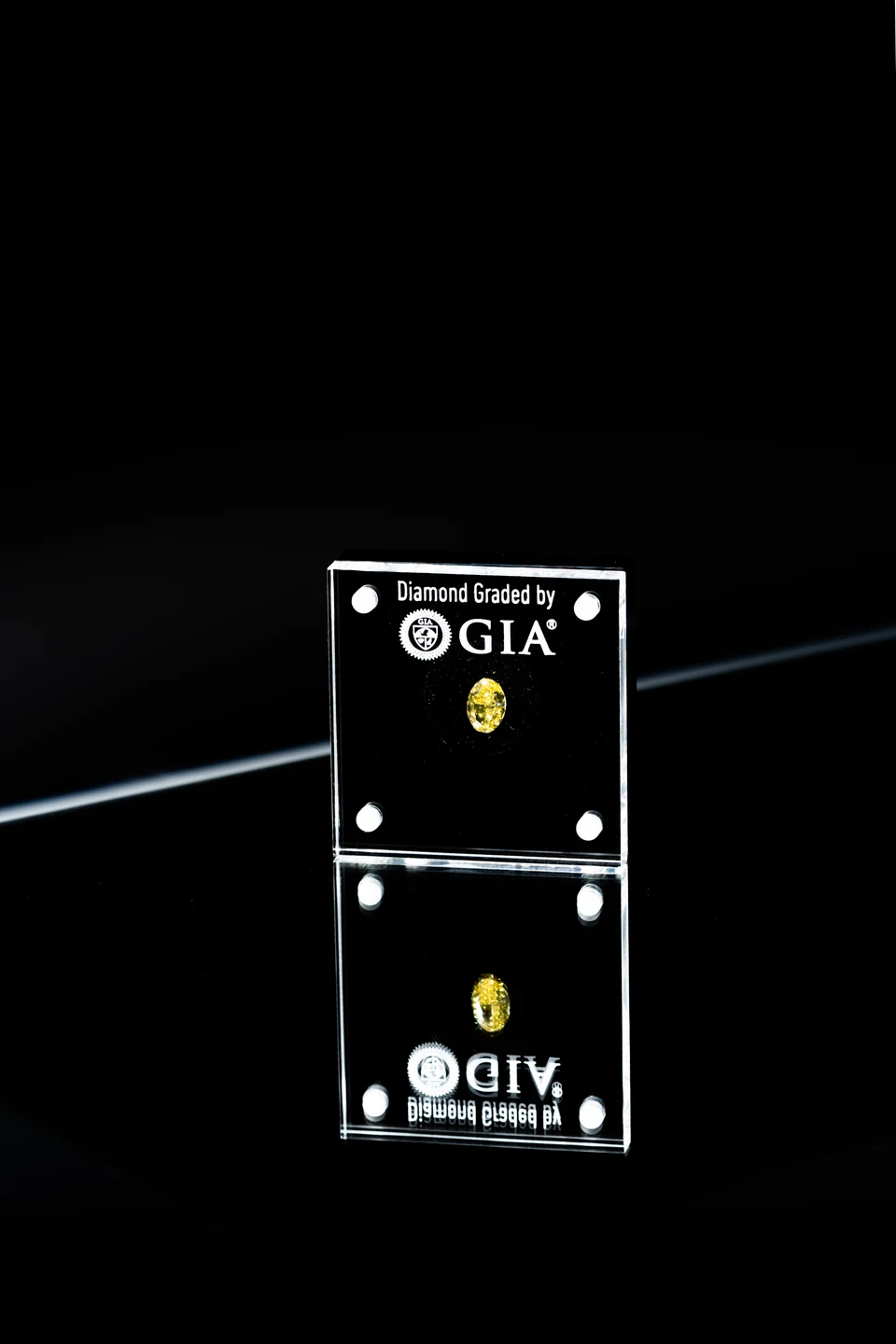
A grading report records a laboratory’s assessment of a stone. Read it alongside the details of the piece you intend to buy, rather than treating a laboratory name alone as a description of the jewellery.
Identify the document
Ask which laboratory issued the report and whether it covers the main stone, several stones or the finished piece. Check the date and the terminology used. Do not assume that one report covers every small stone in a setting.
Read the relevant system
Reporting systems differ. Since 1 October 2025, GIA’s assessment for D-to-Z laboratory-grown diamonds uses Premium and Standard categories. Older documents can use different terminology. Read the system on the actual report; do not directly substitute one laboratory’s labels for another’s.
Verify the record
Use the issuing laboratory’s verification service. IGI provides an online report check linked below. Compare the document with the stone details supplied by the seller, and ask a qualified professional if you need help matching the stone to its report.
Keep the order details separate
A report describes the assessed material. It is not the order agreement for the metal, setting, size, delivery or aftercare. Confirm those details separately and keep the report with your purchase records. We can explain which documentation accompanies the specific stone you choose.